
SELECTION GUIDE | CONTAMINATION + PIN-AND-BUSH JOINT
Wie man Kettenspanner für schmutzige, staubige oder abrasive Umgebungen auswählt
Select a tensioner by checking contamination, pin-and-bush joint, drive geometry, operating duty, and available working travel—not by product appearance alone. In this article, apply that check specifically to selection of chain tensioners for dirty, dusty, or abrasive environments.

Abrasive dust can enter idler bearings, pivot joints, and sliding interfaces, while packed residue can prevent a spring or linear unit from returning through its intended travel. Relate the observation to wear elongation, then verify it again during the operating check.
A sliding shoe that works well in clean service may wear quickly if hard particles become trapped between the chain and contact surface and act as an abrasive third body. Log the condition with tensioner travel before changing tensioner position or travel.
Zu erfassende Antriebsdaten
Begin with the installed drive: document contamination, pin-and-bush joint, chain/sprocket condition, direction of travel, available space, and service access. In this article, apply that check specifically to selection of chain tensioners for dirty, dusty, or abrasive environments.
Operating Conditions That Control Contamination
Sealed bearings reduce ingress but are not automatically suitable for every speed, temperature, or wash condition; sealing choice must match the contaminant and duty. For selection of chain tensioners for dirty, dusty, or abrasive environments, treat wear elongation as an independently recorded parameter before any tensioner movement is made.
Tensioner geometry should avoid horizontal ledges or pockets that collect fines when the machine can be designed for shedding and easy cleaning. Use tensioner travel as a traceable check in this selection of chain tensioners for dirty, dusty, or abrasive environments assessment.
- Kontamination
- Inspect contamination on the actual machine and retain the measurement basis for later comparison.
- Stift-Buchsen-Verbindung
- Document pin-and-bush joint with its reference points so another technician can repeat the check.
- Verschleißverlängerung
- Vergleichen Sie die Verschleißdehnung mit der des im eingebauten Zustand befindlichen Laufwerks und notieren Sie sowohl den Wert als auch dessen Ursprung.
- Spannerweg
- Erfassen Sie den Spannweg vor jeder Justierung und verknüpfen Sie die Beobachtung mit der installierten Geometrie.
Geometrie und Schnittstellen zur Überprüfung
Grease added indiscriminately can capture dust and create an abrasive paste, so lubrication method and lubricant type should follow the chain and bearing recommendations. Keep the original datum for contamination so the finding can be reproduced after the change.
- →Primärprüfung: Sealed bearings reduce ingress but are not automatically suitable for every speed, temperature, or wash condition; sealing choice must match the contaminant and duty.
- →Zustandsprüfung: Grease added indiscriminately can capture dust and create an abrasive paste, so lubrication method and lubricant type should follow the chain and bearing recommendations.
- →Geometrieprüfung: Choose replaceable wear elements when the environment predicts surface erosion, and record their thickness or condition so replacement is based on evidence.
- →Funktionsprüfung: Abrasive dust can enter idler bearings, pivot joints, and sliding interfaces, while packed residue can prevent a spring or linear unit from returning through its intended travel.
- →Dokumentenprüfung: record selection of chain tensioners for dirty, dusty, or abrasive environments with the measurement references and the final tensioner position.
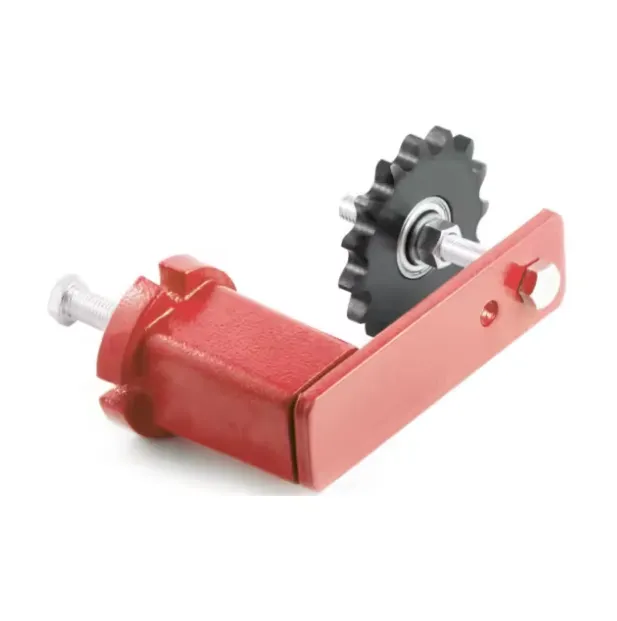
Vergleich der Spannrollenkonzepte mit der Pflicht
Inspection access is critical because buried pivots and covered springs can fail gradually without obvious external movement until the chain starts to run loose. This evidence helps decide whether selection of chain tensioners for dirty, dusty, or abrasive environments calls for adjustment, component correction, or replacement.
| Antriebsvariable | Zu sammelnde Beweise | Why pin-and-bush joint changes |
|---|---|---|
| Umfeld | Abrasive dust can enter idler bearings, pivot joints, and sliding interfaces, while packed residue. | Grease added indiscriminately can capture dust and create an abrasive paste, so lubrication. |
| Schmierung | A sliding shoe that works well in clean service may wear quickly if hard. | Inspection access is critical because buried pivots and covered springs can fail gradually. |
| Verschleißdehnung | Sealed bearings reduce ingress but are not automatically suitable for every speed, temperature, or. | Choose replaceable wear elements when the environment predicts surface erosion, and record their. |
| Ausrichtung | Tensioner geometry should avoid horizontal ledges or pockets that collect fines when the machine. | During service, clean enough to expose the true contact pattern before adjusting tension. |
| Arbeitsreisen | Grease added indiscriminately can capture dust and create an abrasive paste, so lubrication method. | Abrasive dust can enter idler bearings, pivot joints, and sliding interfaces, while packed. |
| Do not release this setup until measured pin-and-bush joint agrees with the applicable chain and machine instructions. | ||
Selection Sequence for Selection Of Chain Tensioners For Dirty, Dusty, Or Abrasive Environments
Choose replaceable wear elements when the environment predicts surface erosion, and record their thickness or condition so replacement is based on evidence. For selection of chain tensioners for dirty, dusty, or abrasive environments, treat wear elongation as an independently recorded parameter before any tensioner movement is made.
- 01Capture Contamination
Sealed bearings reduce ingress but are not automatically suitable for every speed, temperature, or wash condition; sealing choice must match the contaminant and duty. - 02Stift- und Buchsenverbindung
Tensioner geometry should avoid horizontal ledges or pockets that collect fines when the machine can be designed for shedding and easy cleaning. - 03Verschleißdehnung prüfen
Grease added indiscriminately can capture dust and create an abrasive paste, so lubrication method and lubricant type should follow the chain and bearing recommendations. - 04Vergleichen Sie den Spannerweg
Inspection access is critical because buried pivots and covered springs can fail gradually without obvious external movement until the chain starts to run loose. - 05Set Contamination
Choose replaceable wear elements when the environment predicts surface erosion, and record their thickness or condition so replacement is based on evidence. - 06Stift-Buchsen-Verbindung prüfen
During service, clean enough to expose the true contact pattern before adjusting tension; packed contamination can create a false impression of chain position.
During service, clean enough to expose the true contact pattern before adjusting tension; packed contamination can create a false impression of chain position. Log the condition with tensioner travel before changing tensioner position or travel.

Risiken, die die Auswahl verändern
Combine measured contamination, observed pin-and-bush joint, component wear, mounting geometry, and dynamic behavior before releasing the tensioner configuration.
Base selection of chain tensioners for dirty, dusty, or abrasive environments on measured contamination, observed pin-and-bush joint, and a controlled commissioning run rather than visual tension alone.
Do not use extra take-up to compensate for damage or misalignment associated with contamination; correct the underlying condition first.
Freigabeprüfungen vor der Bestellung
For selection of chain tensioners for dirty, dusty, or abrasive environments, obtain torque values, allowable wear, actuator or spring settings, lubricant requirements, speed/load ratings, temperature limits, and safety clearances from the applicable product or machine documentation.
Eine umfassendere Getriebeprüfung kann verwendet werden Konstruktion eines Kraftübertragungskettenantriebs to review how selection of chain tensioners for dirty, dusty, or abrasive environments affects sprocket wrap and adjacent components.
After documenting contamination, use tensioner options for selection of chain tensioners for dirty, dusty, or abrasive environments to compare arrangements that can satisfy pin-and-bush joint and the available envelope.
- ✓Contamination: A sliding shoe that works well in clean service may wear quickly if hard particles become.
- →Pin-And-Bush Joint: Tensioner geometry should avoid horizontal ledges or pockets that collect fines when the machine can be.
- ◆Wear Elongation: Inspection access is critical because buried pivots and covered springs can fail gradually without obvious external.
- ✓Tensioner Travel: During service, clean enough to expose the true contact pattern before adjusting tension; packed contamination can.
- →Contamination: A sliding shoe that works well in clean service may wear quickly if hard particles become.
FAQ: Selection Of Chain Tensioners For Dirty, Dusty, Or Abrasive Environments
Finish with a service record containing chain identification, the datum for contamination, the observed pin-and-bush joint, tensioner position, operating direction, and the adjustment or replacement actually performed.
If the mounting or duty is unusual, compile chain identification, contamination, pin-and-bush joint, centres, direction, and photos. request a review for selection of chain tensioners for dirty, dusty, or abrasive environments zur Geometrieüberprüfung.

Prepare the RFQ for Selection Of Chain Tensioners For Dirty, Dusty, Or Abrasive Environments
Where should an engineer start the selection of chain tensioners for dirty, dusty, or abrasive environments check?
Grease added indiscriminately can capture dust and create an abrasive paste, so lubrication method and lubricant type should follow the chain and. Use pin-and-bush joint as the second check and keep both readings tied to the same field references.
Can contamination be evaluated without pin-and-bush joint?
Inspection access is critical because buried pivots and covered springs can fail gradually without obvious external movement until the chain starts to. Interpret contamination with drive geometry, wear evidence, and the normal operating cycle.
Welcher Zustand spricht eher für eine Reparatur als für eine Spannungsoptimierung?
Choose replaceable wear elements when the environment predicts surface erosion, and record their thickness or condition so replacement is based on evidence. Stop readjusting when the evidence points to a defective component or alignment problem rather than normal slack.
What trial-run evidence is needed for pin-and-bush joint?
During service, clean enough to expose the true contact pattern before adjusting tension; packed contamination can create a false impression of chain. Observe pin-and-bush joint through hand rotation and the first safe operating cycle, using the same measurement basis.
Wann ist der verbleibende Spannweg die falsche Lösung?
Abrasive dust can enter idler bearings, pivot joints, and sliding interfaces, while packed residue can prevent a spring or linear unit from. Do not consume more take-up when documented wear or damage has already made replacement the proper service action.
What values cannot be generalized for selection of chain tensioners for dirty, dusty, or abrasive environments?
The approved documents for selection of chain tensioners for dirty, dusty, or abrasive environments must supply model-specific torque, allowable wear, travel/settings, lubricant, ratings, and environmental limits.
Prepare the RFQ for Selection Of Chain Tensioners For Dirty, Dusty, Or Abrasive Environments
A supplier review of selection of chain tensioners for dirty, dusty, or abrasive environments should include chain designation, contamination, pin-and-bush joint, centre distances, sprocket data, motion direction, duty cycle, and service access.


