
INSTALLATION GUIDE | SLACK STRAND + REVERSING DRIVE
Waar moet een kettingspanner worden gemonteerd: aan de strakke kant of aan de slappe kant?
Install the tensioner around verified slack strand, reversing drive, alignment, travel, guarding, and a controlled hand-turn and trial-run check.

For a normal one-way drive, the tensioner is generally placed on the slack strand so it does not directly oppose the primary transmitted pull in the tight strand. Relate the observation to vertical drive, then verify it again during the operating check.
The slack strand is identified from the actual rotation and torque direction, not simply by choosing the lower chain run in every installation. Log the condition with tensioner travel before changing tensioner position or travel.
TECHNISCHE INPUT
Record slack strand, reversing drive, sprocket centres, chain path, rotation direction, operating duty, and the usable mounting envelope.
chain tensioner guidance for placement of a chain tensioner be installed: tight side or slack side
Pre-Installation Checks for Placement Of A Chain Tensioner Be Installed: Tight Side Or Slack Side
On a reversing drive, the strand roles exchange, so a single fixed-side tensioner can become loaded incorrectly after direction changes. For placement of a chain tensioner be installed: tight side or slack side, treat vertical drive as an independently recorded parameter prior to repositioning the tensioning unit.
Vertical orientation changes where slack collects under gravity and may justify an automatic idler or take-up to maintain reliable sprocket entry. Use tensioner travel as a traceable check in this placement of a chain tensioner be installed: tight side or slack side assessment.
- Slappe streng
- Inspect slack strand on the actual machine and retain the measurement basis for later comparison.
- Reversing Drive
- Document reversing drive with its reference points so another technician can repeat the check.
- Verticale aandrijving
- Check vertical drive against the as-built drive, recording both the value and where it came from.
- Spanner reis
- Leg de beweging van de spaninrichting vast vóórdat er aanpassingen worden gedaan en koppel de waarneming aan de geïnstalleerde geometrie.
Montagereferenties en uitlijning
Position also affects sprocket wrap: a well-placed idler can improve engagement, while poor placement can reduce wrap or create a severe local bend. Keep the original datum for slack strand so the finding can be reproduced after the change.
- →Primaire controle: On a reversing drive, the strand roles exchange, so a single fixed-side tensioner can become loaded incorrectly after direction changes.
- →Conditiecontrole: Position also affects sprocket wrap: a well-placed idler can improve engagement, while poor placement can reduce wrap or create a severe local bend.
- →Geometriecontrole: Check whether the tensioner can contact the chain under transient movement without hitting guards, frame members, product, or another drive component.
- →Bedrijfscontrole: For a normal one-way drive, the tensioner is generally placed on the slack strand so it does not directly oppose the primary transmitted pull in the tight strand.
- →Documentatiecontrole: record placement of a chain tensioner be installed: tight side or slack side with the measurement references and the final tensioner position.
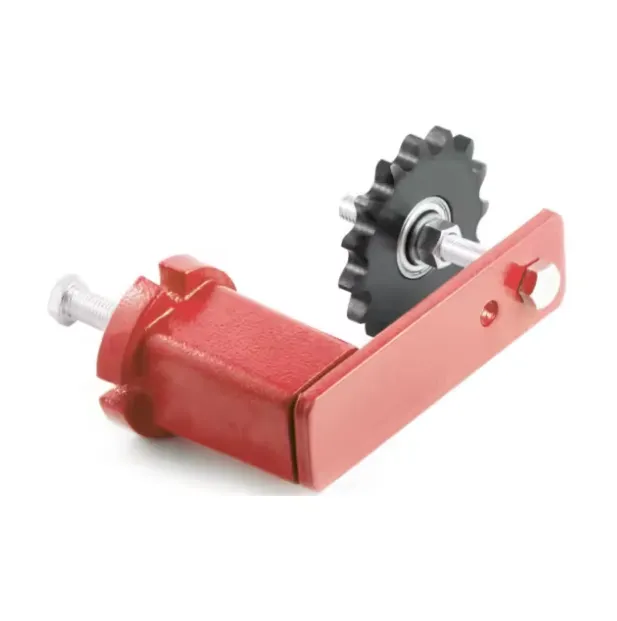
Stel de contactpositie en werkgerelateerde reisplannen in.
Leave enough distance from sprocket tangency points for the chain path to transition smoothly and for the contact element to operate through its full travel. This evidence helps decide whether placement of a chain tensioner be installed: tight side or slack side calls for adjustment, component correction, or replacement.
| Technische input | Hoe kan ik dat vaststellen? | Wat het verandert |
|---|---|---|
| Spannerpositie | For a normal one-way drive, the tensioner is generally placed on the slack strand. | Position also affects sprocket wrap: a well-placed idler can improve engagement, while poor. |
| Direction reversal | The slack strand is identified from the actual rotation and torque direction, not simply. | Leave enough distance from sprocket tangency points for the chain path to transition. |
| Rijoriëntatie | On a reversing drive, the strand roles exchange, so a single fixed-side tensioner can. | Check whether the tensioner can contact the chain under transient movement without hitting. |
| Uitlijning | Vertical orientation changes where slack collects under gravity and may justify an automatic idler. | Before drilling a mounting pattern, mark tight and slack spans for every intended. |
| Slijtageverlenging | Position also affects sprocket wrap: a well-placed idler can improve engagement, while poor placement. | For a normal one-way drive, the tensioner is generally placed on the slack. |
| Reizen voor werk | Leave enough distance from sprocket tangency points for the chain path to transition smoothly. | The slack strand is identified from the actual rotation and torque direction, not. |
| Acceptance requires both the field check and the applicable product limits for reversing drive. | ||
Installation Sequence for Placement Of A Chain Tensioner Be Installed: Tight Side Or Slack Side
Check whether the tensioner can contact the chain under transient movement without hitting guards, frame members, product, or another drive component. For placement of a chain tensioner be installed: tight side or slack side, treat vertical drive as an independently recorded parameter prior to repositioning the tensioning unit.
- 01Vang de Slack-streng op
On a reversing drive, the strand roles exchange, so a single fixed-side tensioner can become loaded incorrectly after direction changes. - 02Map Reversing Drive
Vertical orientation changes where slack collects under gravity and may justify an automatic idler or take-up to maintain reliable sprocket entry. - 03Inspect Vertical Drive
Position also affects sprocket wrap: a well-placed idler can improve engagement, while poor placement can reduce wrap or create a severe local bend. - 04Vergelijk de slag van de spanner
Leave enough distance from sprocket tangency points for the chain path to transition smoothly and for the contact element to operate through its full. - 05Zet de slappe streng
Check whether the tensioner can contact the chain under transient movement without hitting guards, frame members, product, or another drive component. - 06Verify Reversing Drive
Before drilling a mounting pattern, mark tight and slack spans for every intended direction and verify the planned tensioner position on the machine drawing.
Before drilling a mounting pattern, mark tight and slack spans for every intended direction and verify the planned tensioner position on the machine drawing. Log the condition with tensioner travel before changing tensioner position or travel.

Risico's bij de inbedrijfstelling die u in de gaten moet houden
The decision should reconcile slack strand, reversing drive, chain/sprocket condition, available tensioner travel, and the operating cycle. A visually taut strand alone is not proof of a correct setup.
Use measured evidence for slack strand plus a documented check of reversing drive before declaring the configuration acceptable.
Do not assume that a tensioner can correct sprocket wear or poor alignment; establish slack strand and the root cause first.
Acceptatie na de proefloop
For placement of a chain tensioner be installed: tight side or slack side, obtain torque values, allowable wear, actuator or spring settings, lubricant requirements, speed/load ratings, temperature limits, and safety clearances from the applicable product or machine documentation.
Gebruik aandrijfkettingaandrijving for broader chain-drive context, then verify the actual machine for slack strand, reversing drive, and tensioner travel.
Gebruik tensioner options for placement of a chain tensioner be installed: tight side or slack side as a catalogue pool, then validate each option against slack strand, reversing drive, and actual working travel.
- ✓Slack Strand: The slack strand is identified from the actual rotation and torque direction, not simply by choosing.
- →Reversing Drive: Vertical orientation changes where slack collects under gravity and may justify an automatic idler or take-up.
- ◆Vertical Drive: Leave enough distance from sprocket tangency points for the chain path to transition smoothly and for.
- ✓Tensioner Travel: Before drilling a mounting pattern, mark tight and slack spans for every intended direction and verify.
- →Slack Strand: The slack strand is identified from the actual rotation and torque direction, not simply by choosing.
FAQ: Placement Of A Chain Tensioner Be Installed: Tight Side Or Slack Side
Finish with a service record containing chain identification, the datum for slack strand, the observed reversing drive, tensioner position, operating direction, and the adjustment or replacement actually performed.
Before changing the layout, prepare chain designation, slack strand, reversing drive, centres, rotation, duty, clearances, and a drawing. request a review for placement of a chain tensioner be installed: tight side or slack side om de haalbaarheid te bevestigen.

Installatiegegevens voorbereiden voor beoordeling door de leverancier
What information should be captured before placement of a chain tensioner be installed: tight side or slack side?
Position also affects sprocket wrap: a well-placed idler can improve engagement, while poor placement can reduce wrap or create a severe local. Tie the first finding to reversing drive and the actual sprocket engagement, then keep the measurement basis in the service record.
Why is slack strand only one part of the decision?
Leave enough distance from sprocket tangency points for the chain path to transition smoothly and for the contact element to operate through. Treat slack strand as one data point; corroborate it with reversing drive, wear state, geometry, and operating cycle.
Welk bewijs wijst erop dat aanpassing niet de juiste corrigerende maatregel is?
Check whether the tensioner can contact the chain under transient movement without hitting guards, frame members, product, or another drive component. Do not add tension when the evidence identifies damaged hardware, poor alignment, or a wear condition that needs replacement.
How should reversing drive be compared before and after commissioning?
Before drilling a mounting pattern, mark tight and slack spans for every intended direction and verify the planned tensioner position on the. Check reversing drive with the same datum before and after the safe commissioning run, recording changes in path and contact behavior.
Wanneer heeft de staat van slijtage voorrang boven de mogelijkheid tot aanpassing?
For a normal one-way drive, the tensioner is generally placed on the slack strand so it does not directly oppose the primary. Once wear, damage, or geometry reaches the documented replacement criterion, unused take-up travel is not a reason to keep the component in service.
Which product data are essential before releasing placement of a chain tensioner be installed: tight side or slack side?
For placement of a chain tensioner be installed: tight side or slack side, rely on manufacturer or machine documentation for torque, wear, adjustment ranges, lubricant, ratings, temperature, and safety-critical clearances.
Installatiegegevens voorbereiden voor beoordeling door de leverancier
To check placement of a chain tensioner be installed: tight side or slack side, submit chain designation plus slack strand, reversing drive, key sprocket dimensions, direction, operating conditions, available space, and relevant photos.


