
SELECTION GUIDE | REVERSING DRIVE + SHOCK LOAD
How to Choose a Chain Tensioner for Reversing Chain Drives
Select a tensioner by checking reversing drive, shock load, drive geometry, operating duty, and available working travel—not by product appearance alone.

Reversal changes which strand carries the main transmitted load, so a tensioner that is correct in forward rotation can be on the wrong functional side in reverse. Use slack strand as a traceable check in this selection of a chain tensioner for reversing chain drives assessment.
Record the torque level and duration in each direction; occasional low-torque positioning reversals create different requirements from continuous bidirectional power transmission. For selection of a chain tensioner for reversing chain drives, treat shock load as a separately logged condition before the adjuster position is changed.
선택하기 전에
Record reversing drive, shock load, sprocket centres, chain path, rotation direction, operating duty, and the usable mounting envelope.
chain tensioner guidance for selection of a chain tensioner for reversing chain drives
Operating Conditions That Control Reversing Drive
A spring arm must be checked for force direction and over-center behavior in both states so chain pull cannot drive the mechanism into an unstable or locked position. Log the condition with slack strand before changing tensioner position or travel.
Paired tensioners can control both strands, but they must not fight each other by imposing unnecessary preload when one span becomes tight. Compare this condition with tensioner travel and the actual sprocket engagement before release.
- Reversing Drive
- Establish reversing drive from a repeatable field or drawing reference before releasing the tensioner decision.
- 충격 하중
- Measure shock load at the installed interface; note the datum used for the selection of a chain tensioner for reversing chain drives review.
- 슬랙 스트랜드
- Confirm slack strand from a drawing or field reading, then identify that source in the selection of a chain tensioner for reversing chain drives record.
- 텐셔너 트래블
- 실제 장비에서 텐셔너의 이동 거리를 점검하고, 추후 비교를 위해 측정 기준을 보관하십시오.
검증할 형상 및 인터페이스
A central or floating arrangement may follow geometry in both directions, yet its freedom of movement must be bounded so it cannot contact surrounding structure. Use the finding to validate reversing drive rather than relying on visible chain tightness.
- →기본 확인 사항: The drawing should mark both forward and reverse tight/slack strands, tensioner travel limits, and expected chain path before hardware is released.
- →상태 점검: Record the torque level and duration in each direction; occasional low-torque positioning reversals create different requirements from continuous bidirectional power transmission.
- →기하 구조 확인: Paired tensioners can control both strands, but they must not fight each other by imposing unnecessary preload when one span becomes tight.
- →작동 점검: Backlash, coast-down, and sudden torque sign changes can create a short impact as slack transfers from one side to the other; observe this transition during commissioning.
- →서류 확인: record selection of a chain tensioner for reversing chain drives with the measurement references and the final tensioner position.
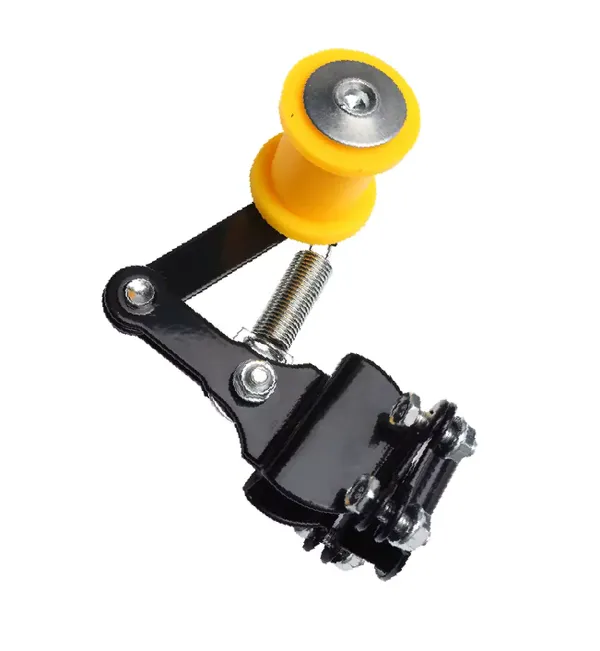
텐셔너 개념과 작동 조건을 비교하십시오.
Backlash, coast-down, and sudden torque sign changes can create a short impact as slack transfers from one side to the other; observe this transition during commissioning. For selection of a chain tensioner for reversing chain drives, treat shock load as a separately logged condition before the adjuster position is changed.
| 의사결정 입력 | 점검 방법 | Effect on reversing drive |
|---|---|---|
| Direction reversal | Reversal changes which strand carries the main transmitted load, so a tensioner that is. | A central or floating arrangement may follow geometry in both directions, yet its. |
| 부하 심각도 | Record the torque level and duration in each direction; occasional low-torque positioning reversals create. | Backlash, coast-down, and sudden torque sign changes can create a short impact as. |
| 텐셔너 위치 | A spring arm must be checked for force direction and over-center behavior in both. | Sprocket wrap must remain acceptable in both directions because an idler position that. |
| 조정 | Paired tensioners can control both strands, but they must not fight each other by. | The drawing should mark both forward and reverse tight/slack strands, tensioner travel limits. |
| 마모 신장 | A central or floating arrangement may follow geometry in both directions, yet its freedom. | Reversal changes which strand carries the main transmitted load, so a tensioner that. |
| 출장 | Backlash, coast-down, and sudden torque sign changes can create a short impact as slack. | Record the torque level and duration in each direction; occasional low-torque positioning reversals. |
| Where documentation gives a tighter limit for reversing drive, that limit governs the selection of a chain tensioner for reversing chain drives decision. | ||
Selection Sequence for Selection Of A Chain Tensioner For Reversing Chain Drives
Sprocket wrap must remain acceptable in both directions because an idler position that improves one engagement zone can worsen the opposite case. Use slack strand as a traceable check in this selection of a chain tensioner for reversing chain drives assessment.
- 01Capture Reversing Drive
The drawing should mark both forward and reverse tight/slack strands, tensioner travel limits, and expected chain path before hardware is released. - 02지도 충격 부하
Reversal changes which strand carries the main transmitted load, so a tensioner that is correct in forward rotation can be on the wrong functional. - 03Inspect Slack Strand
Record the torque level and duration in each direction; occasional low-torque positioning reversals create different requirements from continuous bidirectional power transmission. - 04텐셔너 이동 거리를 비교하세요
A spring arm must be checked for force direction and over-center behavior in both states so chain pull cannot drive the mechanism into an. - 05Set Reversing Drive
Paired tensioners can control both strands, but they must not fight each other by imposing unnecessary preload when one span becomes tight. - 06충격 하중 검증
A central or floating arrangement may follow geometry in both directions, yet its freedom of movement must be bounded so it cannot contact surrounding.
The drawing should mark both forward and reverse tight/slack strands, tensioner travel limits, and expected chain path before hardware is released. Keep the original datum for tensioner travel so the finding can be reproduced after the change.

선택에 영향을 미치는 위험 요소
Combine measured reversing drive, observed shock load, component wear, mounting geometry, and dynamic behavior before releasing the tensioner configuration.
For selection of a chain tensioner for reversing chain drives, take before-and-after readings of reversing drive and shock load, then confirm stable chain tracking during normal operation.
For selection of a chain tensioner for reversing chain drives, never infer force, torque, wear allowance, or speed capability from shape; use the exact product data.
주문 전 릴리스 확인
Do not invent model-specific numbers. Use the chain/tensioner datasheet and equipment instructions for fastener torque, wear limits, lubrication, ratings, travel limits, and critical clearances relevant to reversing drive.
시스템 컨텍스트를 비교하려면 다음을 참조하십시오. 스프로킷 및 체인 구동 방식의 기하학적 구조 with the selection of a chain tensioner for reversing chain drives layout, focusing on chain route and tooth engagement.
With reversing drive and shock load established, review tensioner options for selection of a chain tensioner for reversing chain drives 접촉 형상, 장착 방식, 유효 이동 거리 및 작동 조건에 따라 결정됩니다.
- ✓Reversing Drive: Record the torque level and duration in each direction; occasional low-torque positioning reversals create different requirements.
- →Shock Load: Paired tensioners can control both strands, but they must not fight each other by imposing unnecessary.
- ◆Slack Strand: Backlash, coast-down, and sudden torque sign changes can create a short impact as slack transfers from.
- ✓Tensioner Travel: The drawing should mark both forward and reverse tight/slack strands, tensioner travel limits, and expected chain.
- →Reversing Drive: Record the torque level and duration in each direction; occasional low-torque positioning reversals create different requirements.
FAQ: Selection Of A Chain Tensioner For Reversing Chain Drives
Record the final condition: chain designation, reversing drive, shock load, contact position, remaining travel, direction of motion, and the result of the run check.
For non-standard selection of a chain tensioner for reversing chain drives, submit chain ID, reversing drive, shock load, sprocket data, direction, duty, and a drawing. request a review for selection of a chain tensioner for reversing chain drives 구매 전.

Prepare the RFQ for Selection Of A Chain Tensioner For Reversing Chain Drives
What should be measured first for selection of a chain tensioner for reversing chain drives?
Record the torque level and duration in each direction; occasional low-torque positioning reversals create different requirements from continuous bidirectional power transmission. Compare the result with shock load and the installed chain route before moving hardware.
Is reversing drive enough to make the decision?
A spring arm must be checked for force direction and over-center behavior in both states so chain pull cannot drive the mechanism. Pair it with shock load, component condition, and working travel; no single reading proves suitability.
어떤 결과가 추가적인 조정을 중단시켜야 할까요?
Paired tensioners can control both strands, but they must not fight each other by imposing unnecessary preload when one span becomes tight. Wear, damage, misalignment, or abnormal sprocket condition must be corrected before tension is increased.
How can shock load be checked after the intervention?
A central or floating arrangement may follow geometry in both directions, yet its freedom of movement must be bounded so it cannot. Repeat the same datum during a controlled run and document changes in tracking, noise, contact, or travel.
마모된 부품을 교체해야 할 때, 체인을 더 감는 대신 어떤 상황에서 교체하는 것이 좋을까요?
Backlash, coast-down, and sudden torque sign changes can create a short impact as slack transfers from one side to the other; observe. Replace the affected component when it reaches its specified wear limit, is damaged, or cannot maintain acceptable geometry.
Which limits must come from product documentation for selection of a chain tensioner for reversing chain drives?
For selection of a chain tensioner for reversing chain drives, use the exact chain, tensioner, and equipment data for torque, wear, settings, lubrication, ratings, temperature, and clearances.
Prepare the RFQ for Selection Of A Chain Tensioner For Reversing Chain Drives
For selection of a chain tensioner for reversing chain drives, provide chain ID, reversing drive, shock load, sprocket geometry, direction, duty, environment, mounting space, and a drawing or photo.


